A good sales training programme Malaysia companies invest in should do more than motivate participants for one or two days.
Instead, it should help salespeople handle real customer conversations, apply practical skills at work, and improve sales performance over time.
However, not every company needs the same programme. A retail sales team, an engineering sales team, and a group of account managers face different challenges.
Therefore, before choosing a sales training programme in Malaysia, it helps to understand what an effective programme should include.
Before choosing a sales training programme in Malaysia, it helps to understand what an effective programme should include.
1. Why a Sales Training Programme in Malaysia Should Start With Diagnosis
Sales training should begin with a clear needs analysis, not assumptions.
A company may say: “Our salespeople need to improve their closing.”
However, the real issue could be weak customer discovery, unclear value communication, poor follow-up, or limited access to decision-makers.
But the real issue could be:
weak customer discovery
unclear value communication
poor follow-up
limited access to decision-makers
overreliance on discounts
inconsistent sales management
As a result, training the wrong skill can waste both time and money.
A proper sales training provider should first understand:
the company’s sales goals |
the sales process
the target customers
common sales challenges
the experience level of participants
the results management expects
This is why a Sales Training Needs Analysis is important before the programme is designed.
2. Clear Learning and Business Outcomes
A sales training programme should clearly state what participants are expected to improve.
For example, “improve sales skills” is too broad.
A stronger goal would be:
ask better discovery questions
explain the value more clearly
handle price objections confidently
improve follow-up conversations
guide customers towards the next step
coach sales team members more effectively
In addition, companies should separate learning outcomes into knowledge, skills, behaviour, and business results:
🟢 Knowledge – What participants should understand.
🟢 Skills – What participants should be able to demonstrate.
🟢 Behaviour– What they should apply differently at work.
🟢 Business results – What the organisation hopes to improve, such as conversion, deal progression, customer retention, or margin protection.
Training cannot guarantee sales results by itself. However, clear outcomes make it easier to design the right programme and measure progress.
3. What an Effective Sales Training Programme Should Covereds
An effective sales training programme does not need to cover everything.
Instead, it should focus on the skills that matter most to the team.
For example, a team struggling with price pressure may need value-selling and objection-handling skills.
A team with weak follow-up may need stronger deal progression and sales-process discipline.
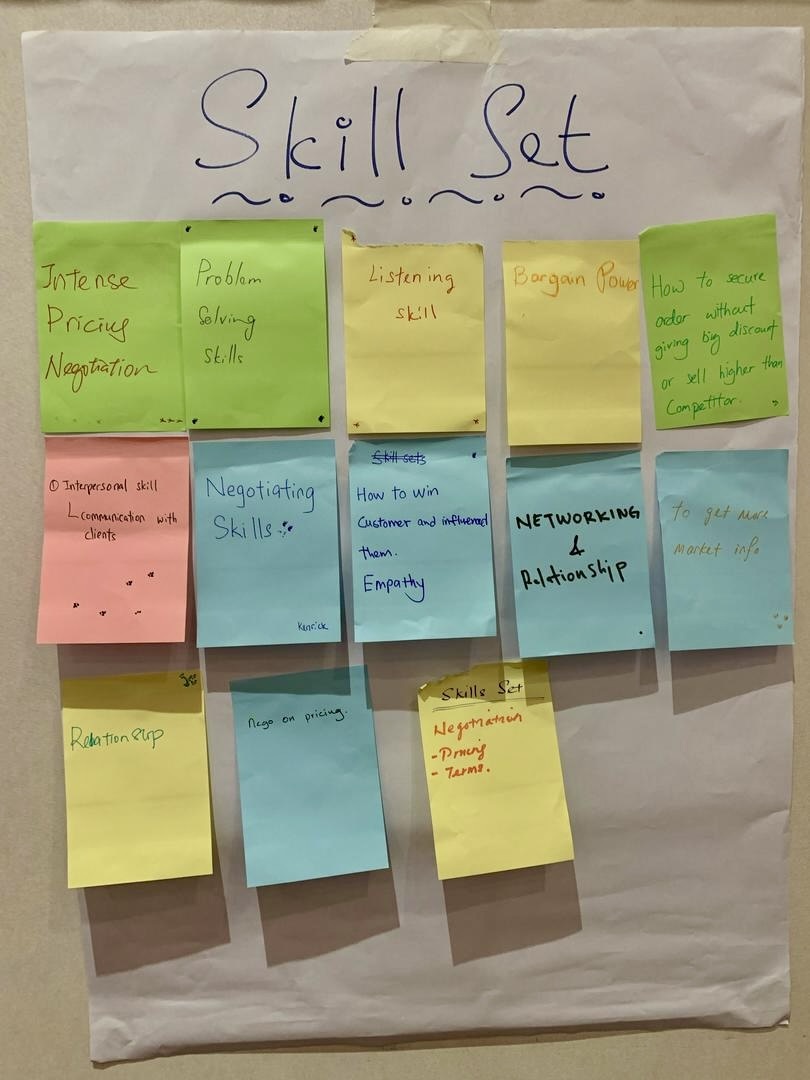
⚫️ Building trust – Helping salespeople create credibility and stronger customer relationships.
⚫️ Customer discovery – Teaching participants to ask useful questions, listen carefully, and understand what the customer is trying to achieve.
⚫️ Sales messaging – Helping salespeople explain products, services, and ideas in a clear and customer-friendly way.
⚫️Value-based selling – Moving the conversation away from price and towards outcomes, impact, and business value.
⚫️Objection handling – Responding to concerns about price, timing, competitors, risk, or internal approval without becoming defensive.
⚫️Negotiation and closing – Helping customers make decisions while protecting value and avoiding unnecessary discounts.
⚫️Follow-up and deal progression – Creating meaningful next steps instead of repeatedly asking: “Any update?”
⚫️Sales leadership and coaching – Equipping sales managers to guide performance through better coaching conversations.
The right mix depends on the team’s current challenges. More content does not always create better learning.
4. Why Sales Training Programmes in Malaysia Should Be Customised
Generic examples are easy to understand but difficult to apply.
Therefore, a customised sales training programme Malaysia sales teams can relate to should reflect their customers, products, sales process, and common objections., including:
products and services
customer profiles
buying process
sales cycle
common objections
competitor pressure
internal approval process
sales team structure
For example, a B2B engineering salesperson may need to manage several stakeholders.
A retail salesperson, however, may need to build trust and respond quickly to price comparisons.
The training should use language and situations that participants recognise.
This makes the learning more practical and reduces the gap between the workshop and the workplace.
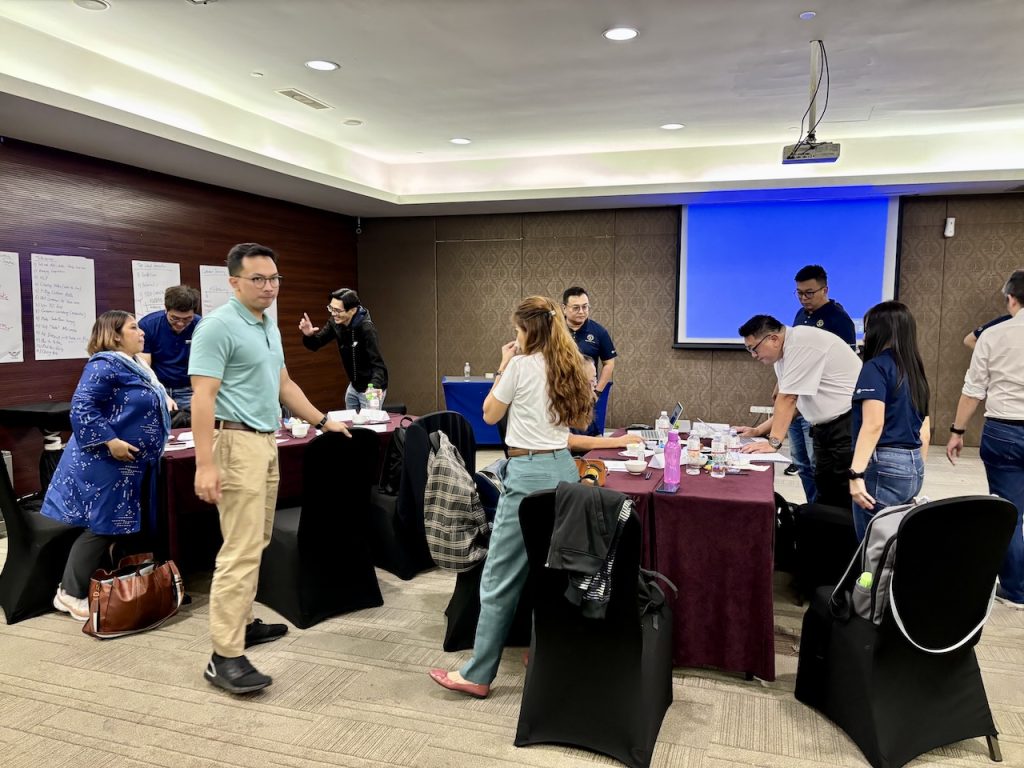
5. Practice and Application in a Sales Training Programme
Sales is a practical skill.
Therefore, participants do not improve simply by listening to a trainer explain what good selling looks like.
Instead, they need opportunities to practise, receive feedback, and try again.
For example, role plays, case studies, simulations, and objection-handling exercises can help participants apply the learning.
Participants do not improve simply by listening to a trainer explain what good selling looks like.
Useful learning activities may include:
role-play conversations
customer case studies
objection-handling practice
group discussions
sales simulations
message-development exercises
peer feedback
action planning
The purpose is not to make participants perform perfectly during training but to help them test new approaches, receive feedback, and build confidence before using these skills with real customers.
A strong programme should therefore balance three elements: Learn → Practise → Apply
6. Practical Tools Participants Can Use
Participants should leave with more than slides and notes.
A useful sales training programme may provide tools such as:
sales conversation frameworks
discovery question banks
value proposition templates
objection-handling guides
follow-up structures
sales process checklists
coaching questions
personal action plans
Simple tools are often more useful than complex models.
The best framework is not the most impressive one. It is the one thing participants can remember and apply during a real customer conversation.
7. Support From Sales Managers
Sales managers play an important role after the training.
Without support, participants may quickly return to old habits.
Therefore, managers should discuss the training during team meetings, review real opportunities, and coach participants on how they apply the new skills.
Managers can support implementation by:
discussing the training during team meetings
observing customer conversations
reviewing real opportunities
asking coaching questions
recognising progress
reinforcing shared sales language
holding participants accountable for action plans
Managers should understand what their teams were taught.
Otherwise, the training and the workplace may send different messages.
8. How to Reinforce Sales Training After the Programme
A one-day or two-day workshop can build awareness and skills. However, it may not be enough to create lasting improvement.
Depending on the organisation’s needs, follow-up support may include coaching, review sessions, field assignments, or 30-day action plans.
As a result, participants are more likely to apply the learning consistently.
Depending on the organisation’s needs, follow-up support may include:
management debriefs
group coaching
individual sales coaching
review sessions
field assignments
pipeline discussions
observation and feedback
30-, 60-, or 90-day action plans
Not every programme requires a long follow-up process.
However, companies should decide how the learning will be reinforced before the training begins.
9. How to Measure the Results of Sales Training
Sales training should not be judged only by participant feedback forms.
Although positive feedback is useful, it does not show whether people changed their behaviour. Instead, companies should review learning, behaviour, sales activity, and business results. However, business results may also be affected by market demand, pricing, lead quality, and product competitiveness.
Possible measures include:
⚫️ Learning measures – Did participants understand the frameworks?
⚫️ Behaviour measures – Are participants asking better questions, explaining value more clearly, or improving their follow-up?
⚫️ Activity measures – Are they conducting more meaningful customer meetings or progressing opportunities more consistently?
⚫️Business measures – Have conversion, margin, customer retention, or sales-cycle performance improved?
Business results may also be affected by pricing, market demand, lead quality, product competitiveness, and management decisions.
The measurements should therefore be realistic and connected to the programme’s original objectives.
A Simple Checklist for Choosing a Sales Training Programme
Before engaging a sales training provider, ask:
What specific sales problem are we trying to solve?
Who should attend the programme?
What should participants do differently afterwards?
Will the content be customised to our business?
Will participants practise using realistic situations?
What tools will they receive?
How will managers reinforce the learning?
How will we review progress after the programme?
Clear answers to these questions will make it easier to choose the right programme.
Final Thoughts
An effective sales training programme Malaysia companies can apply successfully should combine clear needs analysis, relevant content, practice, manager support, and follow-up.
When these elements are in place, sales training becomes more than a one-off event.
Instead, it becomes part of a wider effort to improve sales conversations, communicate value clearly, and achieve more consistent results.
The programme should:
begin with proper diagnosis
focus on clear outcomes
reflect real customer situations
include practice and feedback
provide practical tools
involve sales managers
support follow-through
measure meaningful progress
When these elements are in place, sales training becomes more than an event.
It becomes part of a broader effort to help teams hold better sales conversations, communicate value clearly, and achieve more consistent results.
Exploring Sales Training in Malaysia?
Digital Profit Consultancy provides practical and customised sales training programmes for B2B, B2C, and retail sales teams across Malaysia and the Asia-Pacific region.
Our programmes are designed around each organisation’s sales challenges, customer environment, and desired outcomes.
Start by completing the Sales Training Needs Analysis so we can understand your team’s situation before recommending a programme.
Frequently Asked Questions
How long should a sales training programme be?
Sales training may range from a half-day workshop to a multi-day programme. The right duration depends on the learning objectives, complexity of the sales role, and amount of practice required.
Should sales training be customised?
Yes. Customisation makes the programme more relevant to the company’s products, customers, objections, sales process, and real workplace situations.
Is follow-up coaching necessary after sales training?
Not always, but coaching can help participants apply the learning, address real sales challenges, and maintain accountability after the workshop.
I needed help achieving a career goal. Coach LeikHong was patient throughout our sessions and guided me toward setting SMART goals to succeed in my career. At the end of the session, I found the right path to continue my journey.